
 BM News Feed
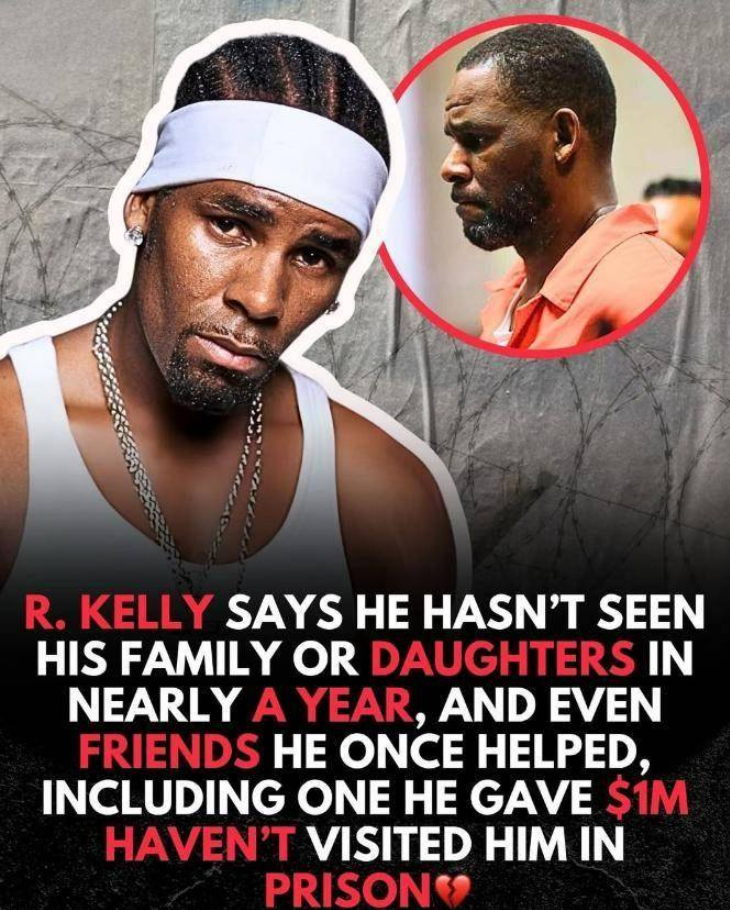
In this fictional storyline, emotions run high as R. Kelly reveals a heartfelt confession that leaves many people reflecting deeply on themes of family, loyalty, and the shifting nature of human connections. In this imagined moment, he shares that he has not seen or spoken with his family for nearly a year, a realization that weighs heavily on him. The sense of distance he describes is not only physical but also emotional, creating an atmosphere of loneliness that feels difficult to ignore. His words express a quiet longing for familiar voices, warm conversations, and the comfort that comes from knowing someone is genuinely in your corner.
As he continues speaking in this fictional account, he reflects on the people he once supported, mentored, or stood beside in earlier years. He remembers moments when he offered encouragement, shared opportunities, or extended kindness. Now, feeling disconnected from many of those same individuals, he wonders how relationships that once seemed strong could fade so quickly. This imagined inner monologue invites the audience to consider how life’s challenges—especially the difficult ones—can reveal who remains present and who quietly steps away.
The confession quickly becomes a catalyst for public discussion within the story’s universe. Some people respond with empathy, suggesting that anyone facing long periods of isolation would naturally feel forgotten. They point out that it is human nature to desire connection, reassurance, and the comforting reminder that we still matter to the world. Others interpret the situation differently, arguing that distance sometimes forms not out of cruelty but out of emotional exhaustion or complicated personal histories. They note that loyalty can be tested in ways that leave lasting marks on everyone involved.
This fictional moment offers a nuanced look at how relationships evolve over time. It shows how easy it is to assume support will last forever, and how startling it can be when that support fades. Whether intentionally or unintentionally, people sometimes drift away because of personal boundaries, unresolved tension, or simply the pressures of their own lives. The storyline invites the audience to think about the delicate balance between holding on and letting go, as well as the importance of understanding the reasons behind both.
It also highlights a universal truth: even those who appear strong or independent can experience moments of vulnerability. Behind the scenes, away from public noise, people often confront feelings of loneliness that they rarely express. This imagined confession reminds readers that isolation can affect anyone, and that emotional distance is often more painful than the physical kind. It encourages reflection on how meaningful it can be when someone chooses to stay connected, even during the hardest chapters.
Ultimately, this fictional narrative is less about blame and more about understanding. It paints a picture of a man wrestling with the idea of fading support, while also confronting his own role in the changing landscape of his relationships. It sparks thoughtful conversations about forgiveness, accountability, compassion, and the complex ways human bonds rise, fall, and reshape themselves over time.