
 BM News Feed
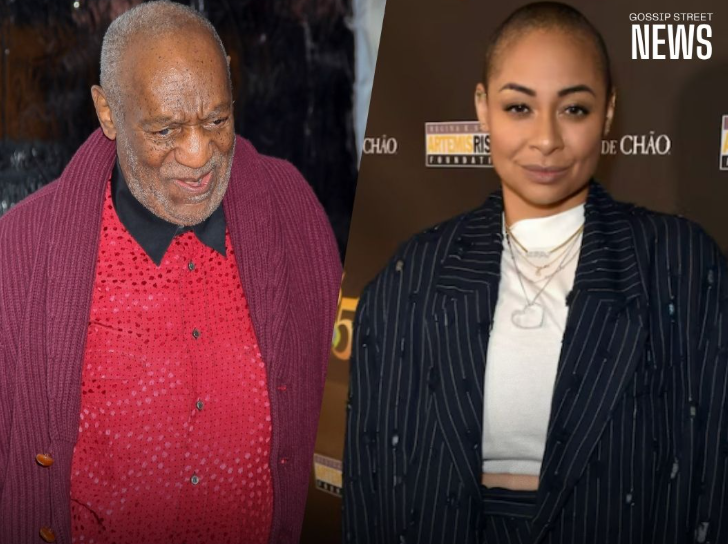
Raven-Symoné has sparked a renewed and complex conversation after sharing her thoughts on how the public should approach the legacy of Bill Cosby. Her comments centered on the idea of separating an individual’s professional contributions from their personal actions, a perspective that has long divided public opinion.
In her remarks, Raven-Symoné acknowledged the seriousness of the allegations associated with Cosby’s personal life. She did not dismiss or minimize the gravity of those accusations, making it clear that they are deeply troubling and should not be excused or ignored. Instead, her focus was on how people contextualize his professional work alongside those allegations.
According to Raven-Symoné, there is value in recognizing what Cosby accomplished in his career while still holding space for accountability regarding his personal conduct. She suggested that these two aspects—professional legacy and personal life—can be examined separately without one erasing the other.
Her statement reflects a broader cultural debate that extends beyond one individual. Society has struggled for years with how to reconcile artistic or professional contributions with deeply flawed or harmful behavior by those who created them. The question is not simple, and opinions often fall on opposite ends of the spectrum.
Some people agree with Raven-Symoné’s perspective, arguing that historical and professional impact should be preserved as part of cultural record. They point to Cosby’s role in breaking barriers in television, reshaping how Black families were portrayed on screen, and influencing generations of entertainers.
From this viewpoint, erasing professional achievements does not undo harm, but rather complicates conversations about progress, representation, and history. Supporters of this stance believe it is possible to acknowledge contributions while still condemning wrongdoing.
Others strongly disagree, asserting that separating the two feels impossible. For them, personal actions fundamentally alter how professional work is viewed. They argue that continuing to celebrate or highlight achievements risks minimizing the experiences of those who were harmed.
Critics of separation often emphasize that public recognition carries moral weight. They believe that honoring someone’s work without fully reckoning with their actions sends the wrong message, especially to victims and survivors who may feel overlooked or dismissed.
Raven-Symoné’s comments also highlight the unique position of people who worked closely with Cosby. For many actors and entertainers who grew up under his mentorship, the conflict is deeply personal. They are forced to reconcile positive experiences with troubling revelations that emerged later.
This internal conflict is something many former collaborators have spoken about over the years. It reflects the difficulty of processing complex truths—where someone can play a significant role in one’s success while also being associated with serious wrongdoing.
The broader conversation raises questions about how society defines accountability. Is accountability about removing all recognition, or is it about ensuring that harm is acknowledged and addressed while history is accurately documented? There is no universal answer, and opinions often depend on personal values and lived experiences.
It also underscores the importance of language. Raven-Symoné’s choice to emphasize that accusations do not excuse behavior was significant. It reinforced that separating professional and personal aspects does not mean ignoring or defending harmful actions.
The debate further exposes how uncomfortable nuance can be. In a culture that often demands clear heroes and villains, situations like this resist simple conclusions. People are left grappling with contradictions that challenge how they understand morality, legacy, and justice.
For some, separating the work from the individual allows room for education and reflection. For others, that separation feels like an emotional burden placed on those affected by harm. Both reactions are valid responses to a deeply sensitive issue.
What remains clear is that conversations like this require care, empathy, and respect. They should not be reduced to sound bites or used to provoke outrage without thoughtful engagement. The stakes involve real people, real pain, and real history.
Raven-Symoné’s comments do not provide a definitive answer—but they do invite discussion. They encourage people to think critically about how we remember public figures, how we honor progress, and how we center accountability without oversimplifying complex realities.
Ultimately, this conversation is not just about Bill Cosby. It is about how society handles legacy in the face of harm, how we balance truth with empathy, and how we move forward without erasing either accountability or history.
In navigating these difficult discussions, the most important element is compassion—for victims, for those grappling with conflicted experiences, and for communities trying to reconcile painful truths with cultural impact. Only through honest and respectful dialogue can progress truly occur.