
 BM News Feed
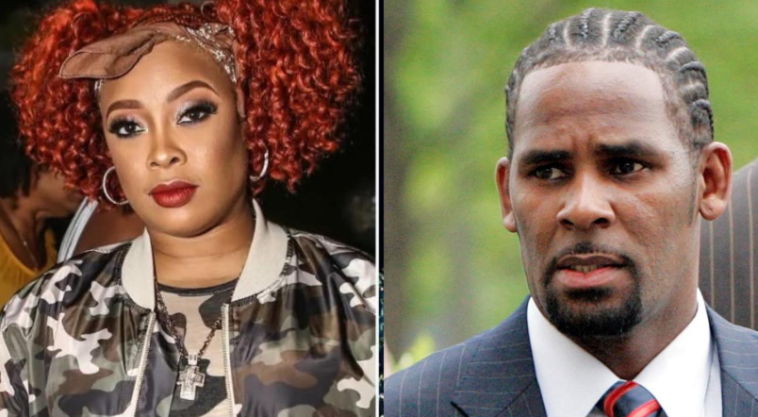
Da Brat recently sparked a thoughtful and necessary conversation when she shared her perspective on how public accountability is often applied unevenly. She pointed out that while many people loudly condemn R. Kelly for his actions, far less attention is given to the partners, enablers, and adults around him who may have played roles in allowing harmful behavior to continue. Her comments challenged listeners to think beyond one individual and examine the wider system of responsibility that often goes ignored.
She emphasized what she sees as hypocrisy in public outrage. According to Da Brat, condemnation is frequently loud and visible, especially on social media, but it is not always consistent or sincere. She suggested that outrage can sometimes be more about appearance than principle, driven by what is socially acceptable to say rather than a genuine commitment to justice or protection of victims.
One of her most striking points was the contrast between public criticism and private behavior. Da Brat argued that many people who openly criticize R. Kelly would likely still support him if given the opportunity. She suggested that if he were released and announced a concert, many of the same voices speaking against him today would quietly line up to buy tickets. This, she said, exposes a gap between what people say publicly and what they are willing to do privately.
Importantly, Da Brat made it clear that her comments were not meant to excuse or defend harmful actions. Instead, she framed her argument around selective accountability. She questioned why society often chooses a single person to carry all blame, while others who may have benefited, stayed silent, or looked the other way rarely face the same level of scrutiny. In her view, accountability should be broader and more honest if real change is the goal.
Her remarks also touched on the idea of performative outrage. Da Brat suggested that cancel culture can sometimes become more about signaling moral superiority than addressing root causes or supporting those who were harmed. She argued that real accountability requires consistency, even when it is uncomfortable or inconvenient, rather than selective outrage that fades when entertainment or personal enjoyment is involved.
By raising these points, Da Brat challenged people to examine their own behavior. She asked listeners, directly or indirectly, to reflect on whether their actions truly align with their stated values. Are people holding everyone accountable, or only the most visible figure? Are they standing on principles consistently, or only when it is socially rewarded?
The conversation she sparked extends beyond one individual or one situation. It speaks to a larger pattern in society, where public opinion is often shaped by trends, headlines, and online reactions rather than sustained commitment to justice. Da Brat’s perspective encourages deeper reflection on responsibility, integrity, and the difference between genuine concern and surface-level condemnation.
Ultimately, her comments served as a reminder that accountability should not be selective or convenient. If society wants to stand on morals, those morals must be applied evenly and honestly. Otherwise, outrage risks becoming more about performance than progress, and real change remains out of reach.