 BM News Feed
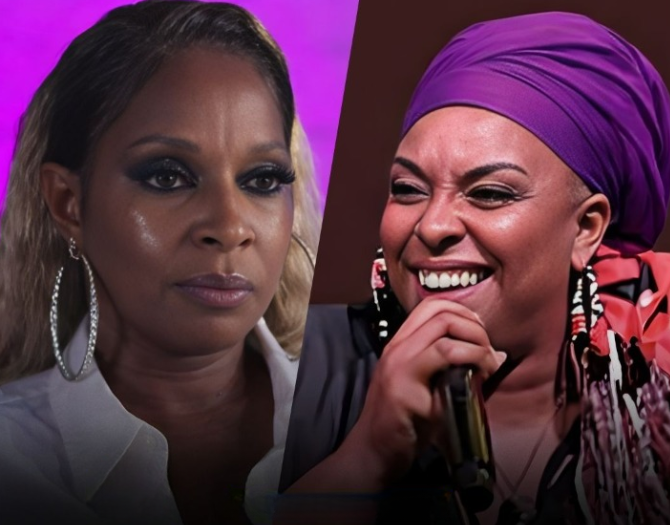
Jaguar Wright has once again stirred public conversation after making bold claims about Mary J. Blige and challenging the legendary singer to take legal action if the statements are untrue. Her comments, which quickly spread across social media, have reignited debates about boundaries, accountability, and the responsibilities that come with making serious allegations in the public eye.
According to Wright, her remarks are rooted in what she describes as personal knowledge and long-standing industry observations. She framed her statements as a challenge, insisting that if she were fabricating information, legal action would be an appropriate response. This confrontational stance has drawn attention not only to the claims themselves, but also to the way such accusations are presented and consumed by the public.
Wright suggested that certain personal choices and relationships in Mary J. Blige’s past were misrepresented to the public. She implied that marriage, in her view, served as a form of public protection rather than a true reflection of private identity. These comments were framed as an attempt to expose what she believes are hidden truths within the entertainment industry, though no evidence was publicly presented to support her claims.
The situation highlights an ongoing pattern in which unverified statements about celebrities’ private lives quickly gain traction online. In the age of social media, accusations can spread rapidly, often without context, confirmation, or consideration for the impact they may have. This dynamic places public figures in difficult positions, where silence can be interpreted as guilt and responses can fuel further controversy.
Supporters of Wright argue that she is simply speaking her truth and calling out what she sees as long-standing industry secrecy. They believe her willingness to speak openly challenges a culture of silence and protects others from similar experiences. From this perspective, her comments are viewed as courageous, even if uncomfortable.
Critics, however, strongly disagree. Many see the remarks as invasive and harmful, arguing that speculation about someone’s personal life crosses ethical lines, especially when it involves identity, relationships, or intimate matters. They stress that making such claims without verifiable proof can cause unnecessary damage to reputations and emotional well-being.
The controversy also raises broader questions about accountability in public discourse. While freedom of speech allows individuals to express opinions and experiences, it does not remove the responsibility to speak carefully, especially when discussing real people. Public accusations can have lasting consequences, regardless of their accuracy, and the line between personal testimony and harmful rumor can easily blur.
Mary J. Blige has not publicly responded to the claims. As with many similar situations, her silence has been interpreted in different ways by different audiences. Some view it as restraint and dignity, while others see it as avoidance. Without an official response, speculation continues to fill the gap.
Ultimately, this moment reflects a larger cultural tension between exposure and respect, truth-telling and privacy. It underscores how quickly conversations can escalate when serious claims are made publicly and emotionally. Whether this situation leads to legal action, clarification, or eventual silence, it serves as another reminder of the power—and potential harm—of words in the digital age.