 BM News Feed
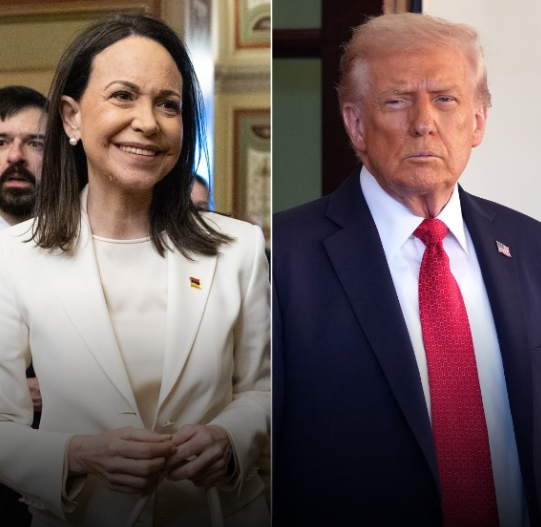
Venezuelan opposition leader María Corina Machado recently made headlines after presenting what she described as her Nobel Peace Prize recognition to former U.S. President Donald Trump. The symbolic gesture immediately sparked discussion across social media and political circles, drawing attention to Machado’s ongoing efforts to highlight Venezuela’s political crisis on the global stage.
Machado, a prominent figure in Venezuela’s opposition movement, has long positioned herself as a vocal critic of the country’s current leadership. Her activism has focused on democratic reform, human rights, and international pressure aimed at restoring political freedoms in Venezuela. By publicly associating her work with global peace efforts, Machado continues to frame her political struggle as part of a broader international fight for democracy.
The presentation to Trump appeared to be largely symbolic, intended to acknowledge his past stance toward Venezuela during his presidency. Trump’s administration imposed strong sanctions on the Venezuelan government and openly supported opposition leaders, including Machado and others who challenged the ruling regime. For Machado, the moment seemed to represent recognition of political alignment rather than a formal award exchange.
Supporters of Machado viewed the gesture as a strategic move to reinforce international alliances and keep attention focused on Venezuela’s ongoing struggles. Many praised her for using high-profile moments to amplify her message and seek continued global involvement. To them, the presentation symbolized gratitude for political backing and a shared opposition to authoritarian leadership.
Critics, however, questioned the optics and meaning of the presentation. Some argued that the act blurred the lines between symbolic recognition and official honors, leading to confusion and debate online. Others expressed concern that such gestures risk overshadowing the humanitarian issues facing Venezuelan citizens by shifting focus to political personalities instead of policy outcomes.
Trump’s response to the moment was measured, acknowledging the recognition while reiterating his views on Venezuela’s political situation. He has previously described the crisis as one of the most serious in the Western Hemisphere and has maintained that international pressure remains necessary to encourage democratic change. The exchange reinforced his continued interest in foreign policy discussions tied to leadership and sovereignty.
The event also highlights how symbolic acts play an increasingly visible role in modern political messaging. In an era driven by media coverage and viral moments, gestures like this often carry layered meanings, serving as both political statements and strategic signals to supporters, critics, and international observers alike.
For María Corina Machado, the presentation aligns with her broader strategy of maintaining visibility and relevance on the world stage. Whether viewed as a symbolic tribute, a political statement, or a calculated move, the moment underscores her determination to keep Venezuela’s political situation part of global conversation.
Ultimately, the gesture reflects the intersection of politics, symbolism, and international influence. While interpretations may vary, the presentation reinforces Machado’s ongoing effort to frame her activism as part of a global push for democracy and peace, while also reigniting debate over how such symbolic acts should be understood in today’s political landscape.