
 BM News Feed
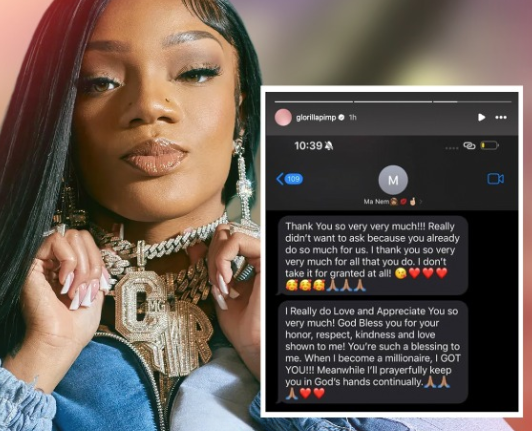
Glorilla has recently appeared to respond to circulating claims suggesting that she does not support her family, and she did so in a way that caught public attention. Instead of responding with anger or denial alone, she chose to share what many are calling “a receipt of her own” — a form of evidence meant to show that she has, in fact, been there for her loved ones. This moment highlights how public figures sometimes have to navigate rumors, perception, and the burden of proving their character in the public eye.
In the age of social media, where stories swirl quickly and opinions form just as fast, misunderstandings or accusations can spread widely before a full picture is known. For someone like Glorilla, who has built a career in music and earned a dedicated fan base, personal matters can quickly become fodder for commentary. When claims about her not helping her family began circulating, many people questioned whether these were fair assessments or misguided speculation.
Rather than allowing the discourse to continue without context, Glorilla chose to address the issue directly. She shared personal details — what some interpret as proof — demonstrating that she has been contributing to her family’s well-being in meaningful ways. This decision reflects her desire to set the record straight and protect her reputation, especially in matters involving those closest to her.
What stands out in this exchange is not only the content of her response but the way she delivered it. Instead of engaging in heated back-and-forths with critics, she offered tangible information that shifts focus from rumor to experience. Many of her supporters have applauded this approach, noting that actions and transparency often speak louder than words alone. By providing evidence of her efforts, she reframes the narrative around her relationship with family and underscores her commitment outside of the spotlight.
The situation also brings up broader questions about privacy and public scrutiny. Artists and celebrities often grapple with the challenge of maintaining personal boundaries while being subject to immense public interest. For fans and commentators, it can be easy to forget that behind the persona are real relationships and genuine moments that don’t always fit neatly into social media captions or headlines.
For Glorilla’s family and close circle, this moment may serve as a reminder that support doesn’t always need to be public to be sincere. Not all acts of love and responsibility are visible on screens or in posts, and the nuances of family dynamics are rarely captured entirely in commentary threads. Whether it’s emotional support, financial assistance, or simply being present, the ways people show up for one another can take many forms.
In the end, Glorilla’s response appears to be her way of reaffirming her values, her priorities, and her connection to those she cares about. It’s an example of someone taking control of her narrative with clarity, confidence, and authenticity. And while conversations about public figures and their personal lives will likely continue, this moment underscores the importance of approaching such topics with respect and awareness of the full context.
Glorilla’s actions show that when faced with allegations, a thoughtful and grounded response can be a powerful way to address misconceptions and shine a light on the truth as she sees it.