
 BM News Feed
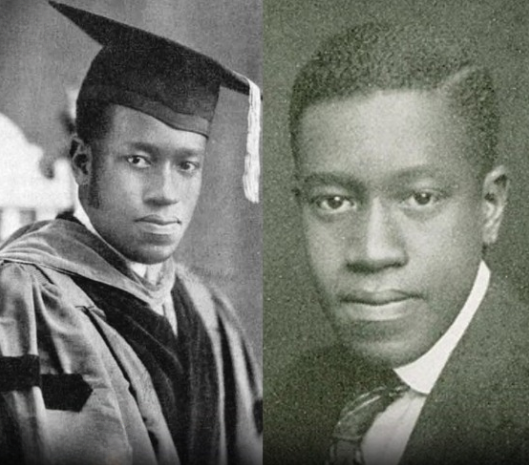
Elbert Frank Cox made history on September 26, 1925, when he became the first Black person in the United States to earn a Ph.D. in mathematics. At a time when racial barriers were deeply entrenched in higher education, this achievement represented far more than an academic milestone. It marked a turning point that expanded what was considered possible for future generations of scholars.
Earning a doctorate in mathematics requires exceptional discipline, analytical skill, and perseverance. Achieving that distinction in the early twentieth century demanded additional resilience, as opportunities for Black scholars were severely limited. Cox completed his Ph.D. at Cornell University, producing advanced research in polynomial solutions and contributing to a field that was, at the time, largely inaccessible to people of color.
His accomplishment resonated far beyond the walls of academia. For many aspiring students, particularly those who had been discouraged from pursuing advanced study, Cox’s success offered visible proof that intellectual excellence could transcend imposed limitations. Representation in mathematics and the sciences has long carried symbolic weight, and Cox’s achievement provided an early foundation for greater inclusion.
However, his impact did not end with his degree. Cox devoted much of his career to teaching and mentoring, most notably at Howard University and later at West Virginia State College. In these institutions, he helped cultivate generations of mathematicians, educators, and scientists. His presence in the classroom demonstrated that advanced scholarship and dedicated mentorship could coexist powerfully.
Cox understood that expanding access to mathematical education required more than personal success; it required lifting others. Through patient instruction and high expectations, he encouraged students to pursue graduate study and professional excellence. Many of those he mentored went on to make meaningful contributions in their own right, extending his legacy through their work.
His research and teaching career unfolded during a period when systemic inequality limited professional opportunities for Black academics. Yet Cox continued to build scholarly communities and advocate for rigorous mathematical study. His example showed that intellectual achievement could challenge long-standing assumptions about who belonged in elite academic spaces.
Today, his story remains relevant. Conversations about diversity in STEM fields often look back to pioneers who opened doors in earlier eras. Cox stands among those trailblazers whose accomplishments altered the academic landscape and broadened participation in mathematics.
Rather than being a distant historical footnote, his life offers an enduring lesson about perseverance, scholarship, and mentorship. One doctoral degree, earned under difficult circumstances, helped shift expectations and inspire countless students to pursue advanced study.
Elbert Frank Cox’s legacy continues to influence mathematics education and representation. His achievement in 1925 was not only a personal triumph but also a milestone that expanded opportunity. Nearly a century later, his example still underscores the power of determination and the lasting impact of academic leadership.