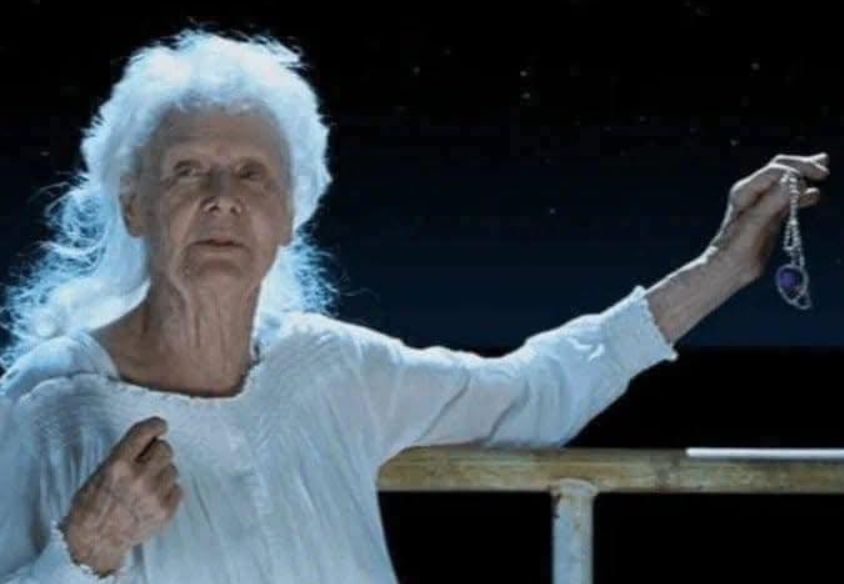
Maturity is realizing Rose DeWitt Bukater from Titanic may not be as innocent as she seems—throwing away a priceless necklace, letting Jack Dawson die, and choosing a brief romance over everything else.
Maturity can sometimes mean looking at a familiar story from a completely different angle. Take Titanic, for example—a film that many people remember as a timeless romance, but one that also raises some interesting questions when you really think about the choices made by its characters.
At the center of this perspective is Rose DeWitt Bukater, whose actions at the end of the story can feel surprising when viewed through a more practical lens. After decades of keeping the incredibly valuable “Heart of the Ocean” necklace—a piece said to be worth hundreds of millions—she ultimately decides to drop it into the sea. This moment is framed as symbolic and emotional, a tribute to her past and to Jack Dawson, the man she shared a brief but intense connection with during the voyage.
However, when you think about it in everyday terms, her decision raises a few eyebrows. The team of explorers, led by Brock Lovett, had dedicated years of effort, resources, and passion to finding that very necklace. For them, it represented not just wealth, but the culmination of a lifelong pursuit. Rose, knowing this, still chose to keep the necklace hidden until the very end—only to discard it without telling anyone.
Another layer to consider is how long she held onto it. For decades, she kept the necklace tucked away, never revealing its existence to her family. One might wonder how that secret could have impacted those around her. From a practical standpoint, such an item could have changed lives, offering financial security or opportunities for future generations. Instead, she chose to preserve it as a personal keepsake tied to a deeply emotional chapter of her life.
Then there’s the debate that has sparked countless conversations over the years: the fate of Jack in the freezing water. Some viewers have long questioned whether there might have been room for both of them on the floating debris. While the film presents his sacrifice as a tragic necessity, it has still become one of the most talked-about “what if” moments in movie history.
Even the film’s closing scenes invite interpretation. As Rose passes away peacefully, the story suggests a reunion with Jack in the afterlife, reinforcing the idea that their brief connection left a lasting imprint on her life. While some see this as a poetic ending, others interpret it as a reflection of how strongly she held onto that short-lived but meaningful experience.
Looking at the story this way doesn’t necessarily take away from its emotional impact—it simply adds another perspective. Titanic remains a beloved classic, blending romance, tragedy, and spectacle in a way that continues to resonate with audiences. Whether you see Rose’s actions as deeply sentimental or questionably impractical, the film’s ability to spark discussion is part of what keeps it so memorable.