
 BM News Feed
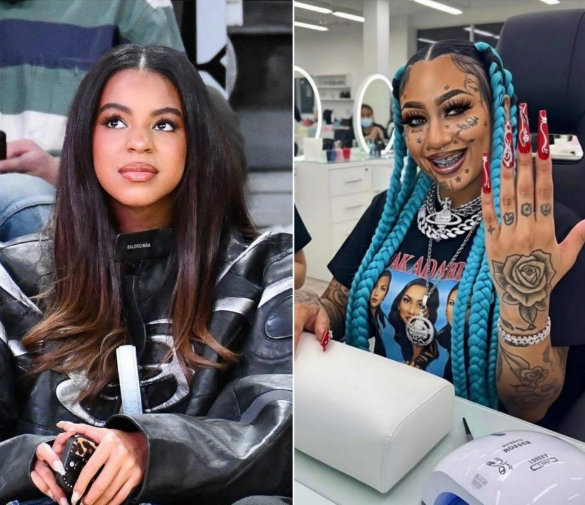
Kanye West and Kim Kardashian have recently found themselves at the center of intense public discussion regarding their parenting, following the controversial public appearance of their daughter, North West. The moment sparked widespread reactions online, with many people expressing concern, while others rushed to compare how different celebrity children are raised under the public eye.
Critics argue that North’s exposure to certain environments and platforms may be happening too early, suggesting that fame, access, and influence can be overwhelming for a child at such a young age. These reactions, while varied in tone, reflect a broader conversation about boundaries, guidance, and the responsibilities that come with raising children in highly visible families.
Some commentators went further, claiming that North may be surrounded by influences that are not age-appropriate. Others, however, cautioned against harsh judgment, reminding the public that parenting decisions are complex, deeply personal, and often misinterpreted when viewed from the outside.
At the same time, many online voices began drawing comparisons between North West and Blue Ivy Carter, the daughter of Jay-Z and Beyoncé. Blue Ivy, now a teenager, is often praised for her poise, discipline, and controlled public presence. Supporters credit her parents for maintaining structure, balance, and clear boundaries despite their global fame.
These comparisons quickly turned into a larger debate about parenting styles among celebrities. Some observers suggested that Jay-Z and Beyoncé have been more intentional about shielding their children from excessive exposure, allowing them to grow with a sense of stability and grounding, even while participating in public projects.
Others pointed out that comparisons between children are inherently unfair. Every child is different, every household operates differently, and every family navigates fame in its own way. Reducing children to examples in online debates can overlook the emotional and developmental realities they face.
A particularly controversial talking point that surfaced was the idea that family structure plays a role in child development. Some online comments implied that having both parents actively present in the same household creates a stronger foundation, while others challenged this notion, emphasizing that loving, supportive parenting can exist in many forms.
It is important to acknowledge that children raised in single-parent households or co-parenting arrangements are not inherently disadvantaged. What matters most is consistency, emotional availability, communication, and support. Many children thrive in diverse family structures when those core elements are present.
The conversation also highlights how easily public opinion can turn into subtle criticism of mothers, particularly when they are highly visible figures like Kim Kardashian. Historically, women—especially mothers—have carried the bulk of public judgment when parenting decisions are questioned, even in shared custody situations.
Meanwhile, Kanye West’s role in the discussion adds another layer of complexity. His public struggles, statements, and distance from certain aspects of family life have fueled narratives that may not fully reflect private realities. Outsiders often lack the full context needed to fairly assess such situations.
What is clear is that celebrity children grow up under a microscope unlike most others. Every appearance, outfit, or public moment can be dissected, debated, and used as a reflection of their parents’ choices. This level of scrutiny can create unrealistic expectations and unfair standards.
Experts often stress that children need room to make mistakes, explore identity, and develop at their own pace. Public pressure, especially when amplified by social media, can complicate that process significantly.
Rather than framing the discussion as a competition between families or parenting styles, many voices are now calling for greater empathy. Children should not be used as symbols in cultural debates or as proof points in arguments about morality, family structure, or success.
Ultimately, the situation raises important questions about fame, boundaries, and responsibility. How much access is too much? How early is too early? And how can parents protect their children’s emotional well-being while navigating industries built on visibility?
These are not questions with easy answers, especially in families where public attention is unavoidable. What deserves emphasis is care, intentionality, and a willingness to prioritize a child’s long-term well-being over short-term attention.
In the end, discussions about parenting—especially when they involve children—should be approached with sensitivity. Critique can exist without condemnation, and conversation can happen without comparison. Every child deserves understanding, protection, and the freedom to grow without being defined by public opinion.