 BM News Feed
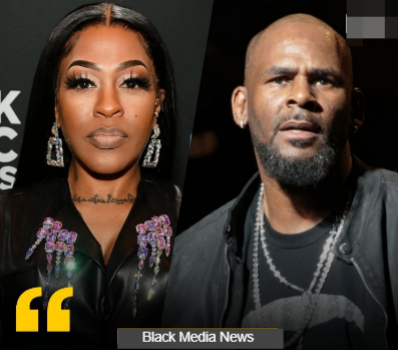
Lil Mo recently shared her perspective on R. Kelly, expressing gratitude for the role he played in her early career and the opportunities he helped create for her as an artist. According to the singer, she feels a deep sense of loyalty because working with him helped bring many of her long-held dreams to life. Her comments sparked conversation online, as they touch on a complex and emotionally charged subject within the music industry.
In her statement, Lil Mo explained that her feelings are rooted in her personal experiences rather than public narratives. She emphasized that her career benefited significantly from collaborations and guidance she received early on, which helped shape her confidence and visibility as a performer. From her point of view, those moments were transformative and remain meaningful to her journey as an artist.
She also shared that she does not want the music industry or public opinion to redefine how she personally views his contributions to her career. For Lil Mo, separating her lived experience from broader industry discussions is important. She believes that her gratitude does not come from ignoring controversy, but from acknowledging the role certain professional relationships played in her growth and success at the time.
The singer’s remarks highlight how complicated it can be for artists who worked closely with influential figures during pivotal moments in their careers. For many, those relationships are tied to life-changing opportunities, financial stability, and creative breakthroughs. When public conversations shift, artists are often left navigating the difficult space between personal history and public accountability.
Lil Mo’s comments also bring attention to the emotional conflict that can arise when someone’s professional legacy becomes widely debated. For individuals who benefited from mentorship or collaboration, it can feel like erasing a chapter of their own story if those experiences are dismissed entirely. Her stance reflects a desire to honor her personal truth without engaging in public condemnation.
At the same time, her words have prompted broader discussions about how the industry addresses accountability, responsibility, and the impact of influential figures. Many listeners recognize that multiple truths can exist at once: someone can have played a significant role in an artist’s success while also being surrounded by serious controversy. These conversations often reveal how deeply personal and layered these situations are.
Lil Mo’s position is not presented as an attempt to speak for others or minimize anyone else’s experiences. Instead, she framed her comments as a personal boundary, choosing not to let outside voices reshape how she remembers her own path. In an industry where narratives are often controlled by headlines, she emphasized the importance of holding onto one’s own perspective.
Her statement also underscores how loyalty, gratitude, and memory can coexist with discomfort and disagreement. Many artists who came up in earlier eras are now reflecting on how to reconcile appreciation for career opportunities with the evolving standards and conversations of today. Lil Mo’s honesty reflects that struggle, even when it invites criticism.
Ultimately, her comments serve as a reminder that the music industry is filled with complicated histories and deeply personal relationships. Artists experience success through people, moments, and systems that are not always easy to categorize as simply good or bad. Lil Mo’s words reflect her choice to speak from her own experience, honoring the part of her story that helped shape who she is today, while navigating a conversation that remains sensitive and emotionally complex.