 BM News Feed
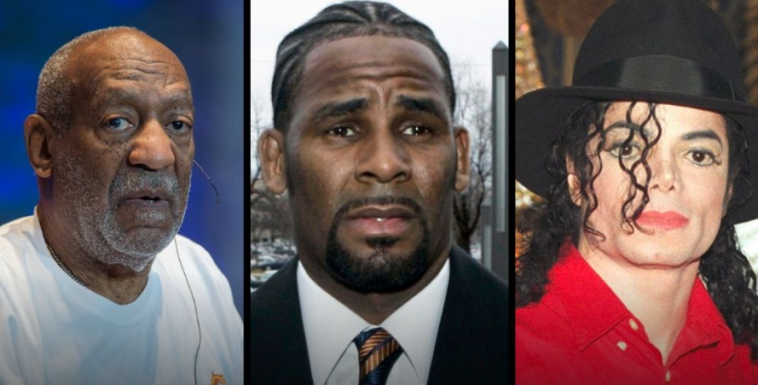
Kanye West recently shared his perspective on how he believes media narratives have shaped public opinion around some of the most influential Black entertainers in history. In his comments, the rapper argued that figures like Bill Cosby, R. Kelly, and Michael Jackson were not only judged in the court of law or public opinion, but also, in his view, heavily influenced by media portrayal. His remarks immediately reignited long-standing debates about power, storytelling, and accountability in the entertainment industry.
According to Kanye, Michael Jackson’s public image is a key example of how media framing can impact how the world views someone. He suggested that for years, headlines and commentary painted Jackson as unstable or eccentric, focusing more on controversy than on his musical genius and cultural contributions. Kanye claimed that this constant narrative shaped how audiences perceived Jackson long before his death, creating an image that overshadowed his artistry and humanity.
Kanye also extended this argument to Bill Cosby and R. Kelly, stating that the media played a significant role in their downfall as public figures. He implied that coverage surrounding them went beyond reporting facts and instead created narratives that influenced how society responded to the allegations and outcomes. In his view, media influence can be so powerful that it determines who is believed, how stories are remembered, and which legacies are permanently altered.
It is important to note that Kanye’s comments were not framed around legal technicalities or court decisions, but rather around perception and storytelling. He appeared to focus on how repeated messaging can shape collective belief, often before all details are fully understood. His statements suggest a concern about how quickly public opinion can shift when driven by headlines, speculation, and constant repetition.
These remarks sparked intense conversation online, with reactions ranging from agreement to strong disagreement. Some people echoed Kanye’s concerns, arguing that the media has historically treated Black celebrities more harshly and sensationalized their personal struggles. Others pushed back, emphasizing the importance of accountability and reminding audiences that serious allegations and legal outcomes cannot be dismissed as mere media influence.
The discussion also highlighted a broader issue: the tension between separating art from the artist. Michael Jackson, in particular, remains a deeply polarizing figure, celebrated for his unmatched contributions to music while surrounded by controversy that continues to divide public opinion. Kanye’s comments tapped into this ongoing struggle over how legacies are defined and remembered.
Critics of Kanye’s stance argue that focusing on media influence risks minimizing the experiences of those who were harmed. Supporters, however, say that acknowledging media power does not necessarily excuse wrongdoing, but instead calls attention to how narratives are constructed and who controls them. This divide shows how complex and emotionally charged these conversations remain.
Ultimately, Kanye West’s remarks reignited uncomfortable but necessary dialogue about media responsibility, public perception, and historical legacy. His comments challenge people to think critically about how stories are told and remembered, while also raising questions about fairness, bias, and accountability. Whether one agrees with him or not, his statements once again placed a spotlight on how deeply media narratives can shape culture, memory, and the reputations of some of the world’s most famous figures.