
 BM News Feed
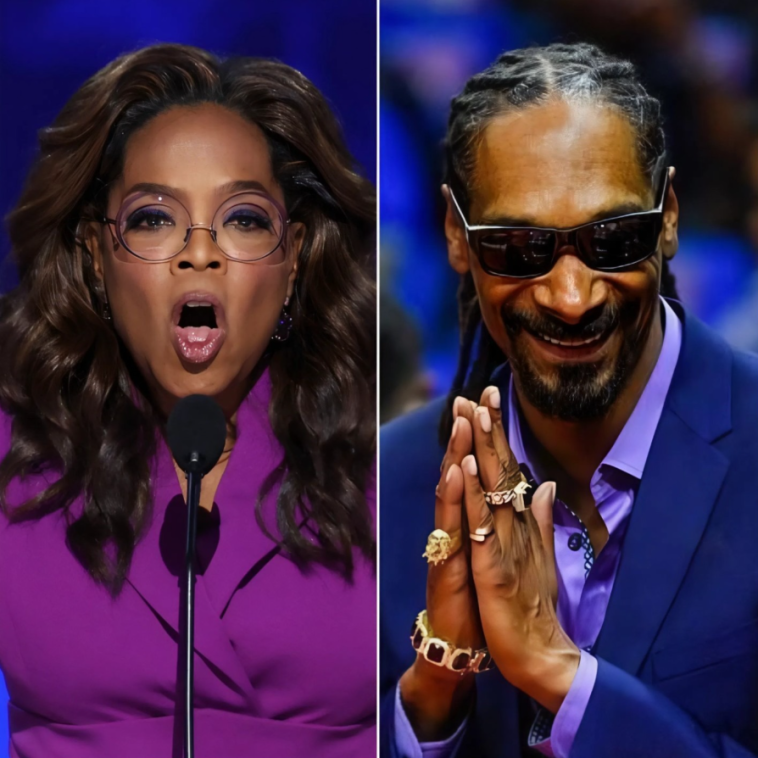
Oprah Winfrey recently took to social media to share her perspective on the attention surrounding Snoop Dogg, sparking a wide-ranging conversation about influence, culture, and what it means to leave a lasting legacy. In her remarks, she reflected on how public figures rise to prominence and what qualities history ultimately values when remembering them. Her comments were thoughtful, measured, and rooted in her own experiences navigating fame and responsibility over several decades.
Oprah acknowledged that Snoop Dogg has been dominating headlines, but suggested that the attention is not driven solely by traditional measures of musical refinement. In her view, much of the buzz surrounding him stems from his relaxed persona, viral appearances, and the visibility of his long and colorful journey in the public eye. She framed this popularity as being closely tied to spectacle and personality, rather than artistry alone.
Drawing a contrast, Oprah reflected on her own career, noting that she spent years cultivating conversations designed to uplift, educate, and bring people together through intention, discipline, and respect. She positioned her legacy as one rooted in structure and purpose, while describing Snoop Dogg as a figure often associated with a culture that values rebellion, informality, and unpolished expression. For her, the distinction highlighted different approaches to influence and leadership.
Oprah also emphasized that widespread popularity does not automatically equate to being a positive role model. She suggested that while someone may be highly visible in the moment, history often remembers qualities such as grace, responsibility, and lasting contribution over style or swagger. Her comments sparked debate, as many interpreted them as a broader reflection on generational values and cultural evolution.
Snoop Dogg responded swiftly, offering his own perspective rooted in personal experience and authenticity. He made it clear that he has never sought approval or attempted to conform to traditional standards of what is considered proper or refined. Instead, he described himself as someone shaped by his upbringing, whose success did not come from fitting in, but from staying true to where he came from.
In his response, Snoop emphasized that his journey has always been about opening doors for others who come from similar circumstances. He spoke about representing people who often feel unseen—those from overlooked neighborhoods, families facing hardship, and individuals navigating limited opportunities. From his point of view, the attention surrounding him is not chaos or disorder, but an expression of freedom and visibility for voices that were once ignored.
Snoop also drew a distinction between polished dialogue and lived experience. While acknowledging the value of refined conversations, he explained that his role has been to speak directly to real-life struggles and survival. He framed his calm, confident demeanor not as carelessness, but as the result of enduring difficult circumstances and emerging with clarity and purpose.
At its core, the exchange highlighted two different philosophies of influence. One emphasizes structure, refinement, and traditional leadership, while the other prioritizes authenticity, representation, and resilience. Rather than a simple disagreement, the moment revealed how culture can be shaped in many ways, each resonating with different audiences and lived realities.
The conversation has since sparked widespread discussion online, with many recognizing that impact is not one-size-fits-all. Whether through polished dialogue or unfiltered truth, both figures have shaped culture in powerful ways. Ultimately, the exchange serves as a reminder that legacy can be defined through many paths, and influence often reflects the communities and experiences a person chooses to represent.