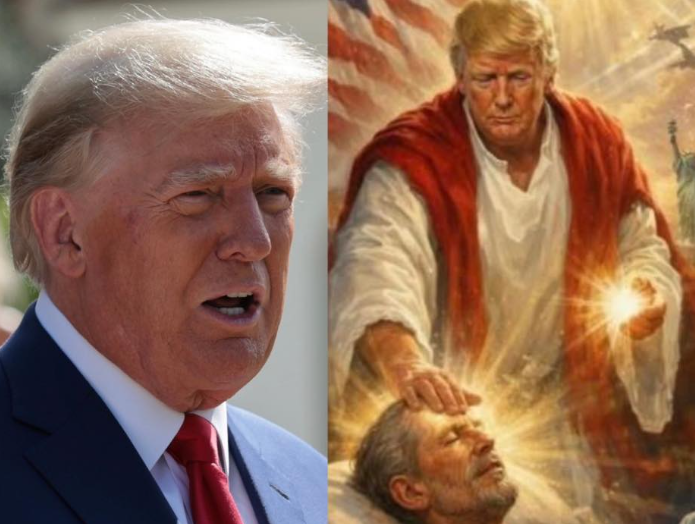
Donald Trump addressed the backlash over a deleted AI image showing him resembling Jesus, claiming he initially thought it depicted him as a doctor.
Donald Trump has responded to controversy surrounding a since-deleted AI-generated image that appeared to depict him in a way resembling Jesus Christ. The image quickly drew widespread attention online, prompting strong reactions from various audiences before it was eventually removed.
Following the backlash, Trump addressed the situation and clarified his perspective. He stated that he had initially believed the image portrayed him as a doctor, rather than recognizing the resemblance that many others pointed out. His explanation added another layer to the ongoing discussion, as people continued to debate both the image itself and the response that followed.
The incident highlights the growing influence of AI-generated content and how easily such images can spread across social media platforms. With advancements in technology, digitally altered or entirely fabricated visuals are becoming more common, often leading to misunderstandings or unintended interpretations. Situations like this emphasize the importance of verifying content and understanding its origins before sharing or reacting.
Public reactions to the image and Trump’s explanation have been mixed. Some individuals accepted his clarification, while others remained skeptical, viewing the situation as part of a broader pattern of controversial online content. Regardless of differing opinions, the event has contributed to a wider conversation about accountability, digital media, and the role of public figures in shaping online discourse.
Overall, the episode serves as a reminder of how quickly digital content can spark debate and how important it is to approach such matters with awareness and critical thinking, especially in an era where artificial intelligence continues to reshape how information is created and consumed.