 BM News Feed
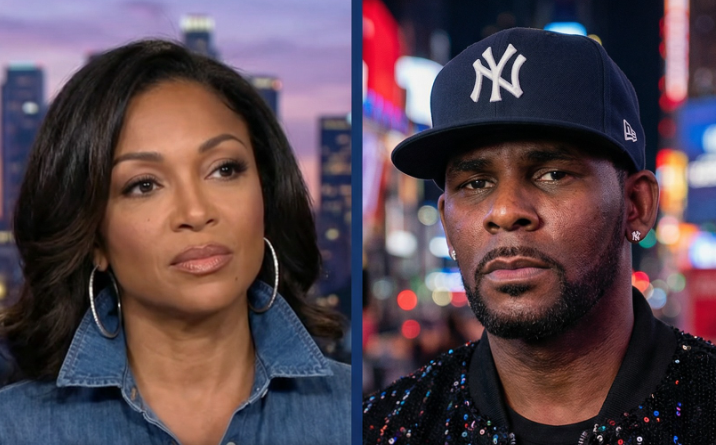
Chanté Moore recently reflected on her experience working with R. Kelly, offering a perspective rooted in her memories as a recording artist rather than in public debate. Speaking about the impact he had on her music, Moore said that his creative ability is undeniable, emphasizing that talent, once demonstrated, cannot simply be erased. Her remarks focused on artistry and a specific professional moment that left a lasting impression on her career.
Moore recalled the time she was in the studio recording the song “Contagious” with Ron Isley, a track that became widely recognized for its storytelling and emotional delivery. What made the session especially memorable, she explained, was the way R. Kelly contributed to the recording process despite not being physically present. According to Moore, he produced her vocals remotely, guiding her performance over the phone with precision and clarity.
She described how unusual yet effective the process was. Even without being in the studio, he was able to hear exactly what was needed and direct subtle changes in tone, phrasing, and emotion. Moore said the experience highlighted a rare level of musical instinct and understanding. For her, it demonstrated how deeply he understood vocal production and storytelling within music.
Moore’s comments were not framed as an attempt to excuse or minimize controversy. Instead, she spoke from the standpoint of an artist reflecting on a specific professional interaction that shaped her work. She acknowledged the complexity of the situation by separating the discussion of musical ability from personal behavior, making it clear that her remarks were about creativity and craftsmanship rather than character.
The singer’s reflections reopened a long-running conversation about how people engage with art created by controversial figures. For artists like Moore, these moments are tied to formative experiences and career milestones. The music represents hours of collaboration, vulnerability, and creative focus that cannot be easily separated from the memories attached to them.
Moore’s statement also highlights how collaboration in the music industry often occurs in unconventional ways. Remote production, now common, was far less typical at the time, making the experience even more striking. She viewed the moment as evidence of an artist operating at a high creative level, able to shape a performance without being in the room.
Her perspective reflects the reality that many artists navigate complicated legacies within the industry. Creative brilliance and personal failure can exist in the same individual, creating tension for those who worked alongside them. Moore’s words suggest that acknowledging talent does not require rewriting history or ignoring difficult truths, but rather recognizing the full complexity of the human experience.
The discussion sparked by her comments shows how deeply music is intertwined with memory and emotion. Songs often outlive the circumstances of their creation, becoming part of listeners’ personal histories. For the artists involved, those songs also represent moments of growth, learning, and professional achievement.
Ultimately, Chanté Moore’s reflection was about honoring her own experience. By recalling the recording of “Contagious,” she offered insight into a moment that shaped her artistry and left a lasting impression. Her words remind audiences that conversations about music, legacy, and accountability are rarely simple, and that personal experiences often exist alongside broader public narratives.